Democracy
The Arithmetic of Mobilization
Posted on 11 mins
Reservation in India was supposed to be temporary. That was the promise — a brief constitutional correction, a decade-long transition to lift the historically marginalized, after which the Republic would move toward equal citizenship. Seven decades later, the transition has not ended. It has expanded. The question of why it endures is usually answered with moral arguments — about justice, historical suffering, social equity. These are the terms the debate is conducted in.
लामबंदी का अंकगणित
Posted on 12 mins
लोकतंत्र के बारे में एक आरामदायक कल्पना है — कि यह विचारों का बाज़ार है, जहाँ सबसे तर्कसंगत तर्क जीतता है, जहाँ नागरिक साक्ष्यों को तौलते हैं और सैद्धांतिक स्थितियों पर पहुँचते हैं। यह एक चापलूसी भरा चित्र है। यह लगभग पूरी तरह से गलत भी है। लोकतंत्र तर्क पर नहीं चलता। यह आम सहमति पर चलता है। और आम सहमति के लिए सही होना ज़रूरी नहीं है। इसके लिए संगठित होना ज़रूरी है।
On Voting Without Apology
Posted on 5 mins
There is a useful exercise before every election: set aside, for a moment, the entire cycle of political blame. Who is responsible for the state of society — the elected, the electorate, the institutions, the courts? Let that argument rest. Instead, ask a more fundamental question: what philosophy, what school of thought, what moral structure does this society need in order to heal and grow? Once you have your answer, the voting question almost resolves itself — which party, which governance, creates the ecosystem in which that philosophy can breathe?
The Trap That Runs Itself
Posted on 8 mins
There is a kind of social engineering so elegant that it requires almost no maintenance once set in motion. No ongoing conspiracy, no shadowy coordination, no continuous effort from whoever designed it. It just runs. The genius of it is that the very people it is used against become its most reliable operators. Understanding how this works requires setting aside the usual framework of oppressor-and-oppressed narratives, and instead looking at the mechanism underneath them — the actual lever being pulled and why it never stops moving.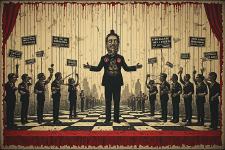
Beyond Discourse | Why Talk Without Action Is the Death of Movements
Posted on 11 mins
There’s a predictable pattern in how social and cultural movements evolve. They begin with conversation—small groups gathering to discuss ideas, share grievances, and articulate visions. This phase is necessary. It’s where consciousness forms, where people realize they’re not alone in their concerns. But here’s the problem: most movements get stuck here. They mistake the beginning for the destination. The discourse phase feels productive. There’s energy in the room when four or five people sit together and talk through complex issues.
Beyond Manipulation | Why Identity Politics Reflects Real Interests
Posted on 4 mins
There’s a persistent narrative in certain political circles that goes something like this: identity politics is a distraction, a tool of division that keeps the masses from recognizing their shared class interests. If only people would stop fighting over race, gender, religion, and other identity markers, they’d see that the real enemy is economic inequality, and unite as the 99% against the 1%. This narrative is seductive in its simplicity.
The Impossibility of Truth in Equal Systems | Why Dharma Must Stand Above Consensus
Posted on 12 mins
Markets emerge naturally wherever humans gather. This is not a political claim but an observation about human nature itself. When people recognize each other’s property rights and engage in voluntary exchange, something remarkable happens: time-preference rates fall. People become more future-oriented. They save, they invest, they build. The farmer who knows his harvest belongs to him plants seeds for next season. The craftsman who owns his tools perfects his technique over years.
The Rational Apathy | Why India's Borrowed Framework Breeds Dysfunction
Posted on 6 mins
The casual observer might blame India’s civic dysfunction on cultural deficiency or innate selfishness. The streets are filthy, systems are routinely exploited, and apathy seems universal. But this explanation is too convenient—it mistakes symptom for cause. The real answer lies not in the character of Indians, but in the nature of the system they inhabit. The Paradox of Rational Selfishness Consider a simple game theory experiment: two players must independently choose between options A and B.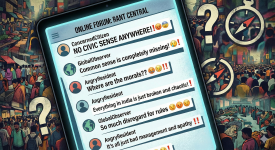
The Performance Problem | On Authenticity and Language in Modern India
Posted on 6 mins
There’s a peculiar phenomenon that runs through the fabric of contemporary Indian society—an overwhelming emphasis on appearance over substance, on the performance of values rather than their practice. From religious observance to professional life, from political discourse to educational pursuits, the culture has become profoundly ornamental. The talk is loud, but the sincerity is thin. The Politics of Symbols Nowhere is this performative tendency more evident than in political discourse.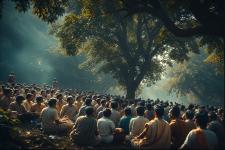
The Scale Problem | Why Large Democracies Struggle with Social Revolution
Posted on 7 mins
TLDR - Summary: Large democracies face unique challenges that smaller nations avoid. India’s billion-plus population hasn’t created mathematical impossibility of consensus—it has culturally chosen to grant permanent veto power to street protests, making electoral democracy meaningless when any small group can endlessly occupy public spaces without consequence. While America demonstrates that democracies can be agile despite polarization (swinging between extremes every four years), India remains paralyzed by its need to accommodate everyone, ultimately accommodating no one.