The Impossibility of Truth in Equal Systems | Why Dharma Must Stand Above Consensus
Table of Contents
Markets emerge naturally wherever humans gather. This is not a political claim but an observation about human nature itself. When people recognize each other’s property rights and engage in voluntary exchange, something remarkable happens: time-preference rates fall. People become more future-oriented. They save, they invest, they build. The farmer who knows his harvest belongs to him plants seeds for next season. The craftsman who owns his tools perfects his technique over years. Civilization, in its most fundamental sense, is the gradual lengthening of human time horizons.
This process accelerates when people cooperate. Voluntary trade increases the supply and value of goods for both parties—otherwise it wouldn’t occur. Knowledge spreads from person to person: that potatoes exist, that they can be eaten, that one potato today yields ten tomorrow. Each piece of shared information pulls humanity further from the immediate gratification of animals and deeper into the distinctly human capacity for delayed reward and complex planning.
But here we encounter a puzzle. If civilization is fundamentally economic—built on markets, property, and exchange—why did philosophy emerge at all? Why do humans, uniquely among animals, concern themselves with abstract questions of right and wrong? A lion doesn’t philosophize about the morality of the hunt. Why should humans?
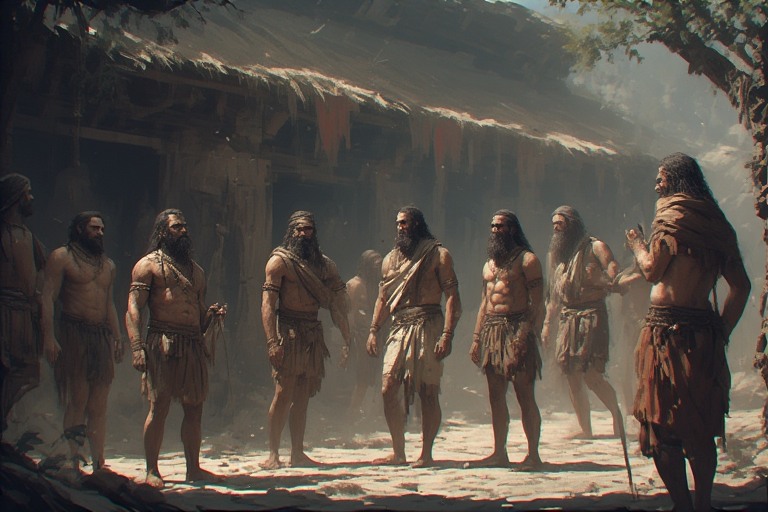
The answer lies in the very thing that separates us from other creatures: the scale and complexity of human cooperation. Animals compete or cooperate in small, immediate contexts. Humans cooperate across vast distances of space and time with strangers they’ll never meet. The person who grows your food, builds your shelter, or creates your tools is almost certainly someone you don’t know personally. This extended cooperation network is humanity’s superpower, but it creates a problem that no other species faces.
When cooperation occurs at such scale, rules become necessary. Not just practical rules, but moral ones. What should be done? What shouldn’t be? These questions matter because their answers determine whether cooperation continues or collapses. In a sense, moral philosophy emerged as a practical necessity, a tool for navigating the complex web of interdependencies that make civilization possible.
But there’s something deeper here. Humans don’t just want rules that work—they want rules that are right. They want objective truth about good and bad. This desire seems universal across cultures and epochs. From ancient Hindu philosophers to Greek ethicists to modern moral theorists, humans have persistently sought not just consensus but correctness. Not just what people agree on, but what actually is true.
The Fatal Flaw of Democratic Truth-Seeking
This brings us to a profound problem, one that strikes at the heart of modern political systems. In a democratic framework, where all individuals are considered equal in power and authority, how can objective truth ever be identified?
Consider a simple scenario. Two people of equal standing disagree about a fundamental moral question. Person A claims that action X is morally correct. Person B claims it is morally wrong. In a democratic system, both voices carry equal weight. Both have the same authority to speak. Both participate equally in the consensus-building process.
But consensus is not truth. The fact that people agree on something doesn’t make it objectively correct. And more importantly, when people disagree and both hold equal power, there is no mechanism to determine which position aligns with objective reality. The system treats both claims as equally valid inputs to a political process, regardless of their relationship to truth.
This is not a bug in democracy—it’s a fundamental feature. Democratic systems are designed to treat all participants as equals. But this very equality makes it impossible to identify objective truth when disagreement arises. If your word carries the same weight as mine, and I can assert falsehoods with the same authority you assert truth, how does truth ever win?
The democratic response is typically to default to majority rule or consensus-building. But this simply changes the question from “what is true?” to “what do most people believe?” or “what can most people agree on?” These are categorically different questions. Popular opinion has been spectacularly wrong throughout history. Consensus has endorsed slavery, rejected heliocentrism, and supported countless other positions we now recognize as false or evil.
Philosophy Without Power
This reveals why philosophy has declined in relevance in the modern era. Philosophy seeks objective truth—what actually is good, what actually is right, what actually should be done. But in a system where everyone has equal power, philosophical truth has no privileged position. A well-reasoned ethical argument carries no more weight in the political process than an emotional appeal or a self-interested demand.
If you were a king, philosophy would matter immensely. Your decisions would affect everyone under your rule, and getting those decisions right would be paramount. You could study moral philosophy, consult with wise advisors, and implement policies based on your best understanding of what is objectively good. Your subjects might disagree, but your authority would allow you to enact what you believe to be true.
But in a democratic system, you’re just another voice. Your philosophical insights have to compete on equal terms with everyone else’s opinions, regardless of how well-reasoned yours are or how poorly-reasoned theirs might be. The person who has spent decades studying ethics and the person who has never thought seriously about morality both get one vote. Both have equal say in consensus-building. Both can equally block the implementation of truth they disagree with.
This is why labeling things as good or bad convinces absolutely nobody in democratic discourse. It’s not that people don’t understand the labels—it’s that they have no reason to submit to them. You say action X is wrong? I say it’s right. Your label carries no more authority than mine. Only cause and effect matters—practical consequences that people care about, not abstract moral truths.
The Necessity of Hierarchy for Truth
Here we arrive at an uncomfortable insight: objective truth can only be identified and implemented when there exists a hierarchy of authority. When disagreement arises between equals, there is no way to determine which position aligns with truth. Both parties will simply insist on their view, and the system provides no mechanism to privilege correctness over error.
But when someone stands above the disagreeing parties, that person can examine both positions and render judgment. This doesn’t guarantee they’ll be right—kings and authorities can be wrong. But it creates the possibility of identifying and implementing truth in a way that equal-power systems cannot.
Consider the alternative. In a system of absolute equality, every question becomes a negotiation. What is true? What people can agree on. What should be done? What enough people support. What is right? Whatever emerges from the consensus-building process. Truth, in such a system, is defined by political success rather than correspondence to reality.
This is precisely backwards. Truth should determine consensus, not the other way around. Rightness should inform what people agree on, not be defined by it. But democratic systems systematically invert this relationship by making consensus the ultimate arbiter while denying any authority to objective truth.
Dharma Above All
The ancient Hindu concept of “Dharma sarva pari”—Dharma is above all—takes on new significance in this context. Dharma represents not mere consensus or popular opinion, but objective rightness, the cosmic and moral order of things. The assertion that Dharma stands supreme is fundamentally a claim about the relationship between truth and power.
When we say Dharma is above all, we mean that truth is not subject to consensus. Rightness is not determined by agreement. The good does not bow to the popular. This is not a statement about democracy being inconvenient or suboptimal—it’s a statement about democracy being inherently incapable of natural truth.
In a democratic system, Adharma (unrighteousness, falsehood, wrong action) is given the same power and platform as Dharma. The liar speaks with the same authority as the truth-teller. The corrupt have the same vote as the virtuous. The ignorant participate equally with the wise. This is the very definition of Kaliyug in political form: not merely that evil exists, but that evil is granted equal standing with good, that falsehood is treated as equivalent to truth.
The recognition that consensus-building systems cannot access objective truth is not an argument against kindness, cooperation, or fair treatment of people. It’s an observation about epistemology—about how truth can be known and implemented. When you must have agreement to act, truth becomes whatever can garner agreement. When everyone’s voice carries equal weight, the weight of truth itself becomes irrelevant.
The Practical Impossibility
Some might object: surely we can convince people of truth through argument, evidence, and reason? Surely rational discourse in a democratic framework can identify what is right?
But this misses the point. The question is not whether people can be convinced—it’s whether they must be convinced before truth can be implemented. In a hierarchical system, truth can be enacted even when people disagree with it. A wise ruler can implement just policies even when they’re unpopular. The policies’ rightness doesn’t depend on consensus.
In a democratic system, unpopular truth simply fails. It doesn’t matter if a policy is objectively good for society—if you can’t convince enough people to support it, it won’t happen. And convincing people requires not just being right, but being persuasive. The truth often loses to comfortable lies, to self-interested manipulation, to emotional appeals that override reason.
This is why cause and effect dominate democratic discourse rather than moral truth. People won’t agree to something that harms them simply because you label it as “good.” They need to see practical benefits for themselves. The discourse becomes entirely consequentialist and self-interested, not because people don’t believe in objective morality, but because the system provides no mechanism for implementing moral truth when people disagree about it.
The Two Paths
We are left with two paths, and we cannot have both simultaneously.
The first path is consensus. Everyone is equal. All voices matter. Decisions require agreement. Truth is defined by what people accept. This path prioritizes equality and participation, but it systematically excludes the possibility of implementing objective truth when people disagree about it.
The second path is hierarchy. Someone stands above, able to identify and implement truth even without consensus. This path makes truth possible in a way that equal systems cannot, but it concentrates power in a way that equal systems deliberately avoid.
Modern civilization has overwhelmingly chosen the first path while maintaining the language of the second. We speak of human rights, objective morality, and universal truths, but we’ve built systems that cannot possibly access these things when they conflict with consensus. We want both equality and truth, but the very structure of equal-power systems makes objective truth systematically unreachable.
The Hindu insight—Dharma sarva pari, truth above consensus—recognizes this impossibility. It asserts that if we must choose between universal equality and objective truth, we must choose truth. Not because equality is bad, but because a system that cannot distinguish truth from falsehood, right from wrong, will inevitably drift toward chaos regardless of how equal it is.
This is not comfortable. It contradicts modern egalitarian instincts. But discomfort with a conclusion doesn’t make it false. The logic is inescapable: equal systems cannot identify truth when disagreement arises, because they have no mechanism to privilege correctness over error. They can only count voices, not weigh rightness.
Living in the Age of Adharma
We live in an era where this problem has reached its logical conclusion. Democratic systems claim to respect truth while systematically undermining any authority it might have. We debate endlessly about what is right as though the debate itself could determine rightness. We treat all positions as equally valid inputs to political processes while claiming to care about objective morality.
This is the essence of Kaliyug in political form: not that people are evil, but that evil is given equal standing with good. Not that lies are common, but that lies are granted the same platform as truth. Not that people disagree about what is right, but that the system treats all positions as equally authoritative regardless of their relationship to objective rightness.
The alternative is uncomfortable because it requires hierarchy, and hierarchy can be abused. But the absence of hierarchy doesn’t solve the problem—it simply makes truth impossible to implement when people disagree about it. We’ve traded the risk of authority being wrong for the certainty that truth cannot win when it lacks sufficient popular support.
Philosophy declined because it became irrelevant in systems where truth has no authority. Economics thrives because it deals in cause and effect rather than moral absolutes. The market doesn’t care if you’re right—it just responds to what you do. Democratic politics works the same way: not right or wrong, just popular or unpopular, supported or opposed.
But civilization was never just about economics. It emerged from markets and property and cooperation, yes, but it grew into something more—a search for truth, for rightness, for Dharma. That search requires the possibility of truth standing above consensus. It requires some way to say “this is right even if most people disagree.” It requires Dharma sarva pari.
Without that, we have markets and we have consensus, but we’ve lost the ability to ask whether what we’ve agreed on is actually good. We’ve built systems that can be efficient, popular, and stable, but cannot be objectively right when rightness conflicts with what people want to hear.
The question before us is whether this is acceptable. Whether civilization can survive when truth has no authority beyond its ability to convince. Whether Dharma can exist when Adharma has equal standing. The answer, if we’re being honest with ourselves, is no. Truth without authority is truth that loses whenever it’s unpopular. Dharma without supremacy is Dharma that falls to Adharma whenever enough people prefer the latter.
This is why the ancient insight matters now more than ever: Dharma sarva pari. Not because hierarchy is always good, but because without it, truth itself becomes impossible to realize in the face of disagreement. Not because consensus doesn’t matter, but because consensus alone can never identify what is objectively right. Not because everyone should submit to authority, but because systems of absolute equality systematically exclude the possibility of implementing truth when people disagree about it.
The modern world has tried to have both—equality and objective truth, consensus and rightness. But these are fundamentally incompatible when disagreement arises. We must choose. And if we choose equality, we must be honest that we’re choosing a world where truth has no authority beyond its popularity, where right and wrong are determined by what people agree on rather than by what actually is.
The alternative—placing truth above consensus, Dharma above popular agreement—is difficult and dangerous. But it’s the only path that makes objective truth possible in a world where people disagree. And if we abandon that possibility entirely, we abandon the very thing that made philosophy matter in the first place: the belief that some things are actually right and some things are actually wrong, regardless of what people think.